Holi-Festival of Colour | Essay
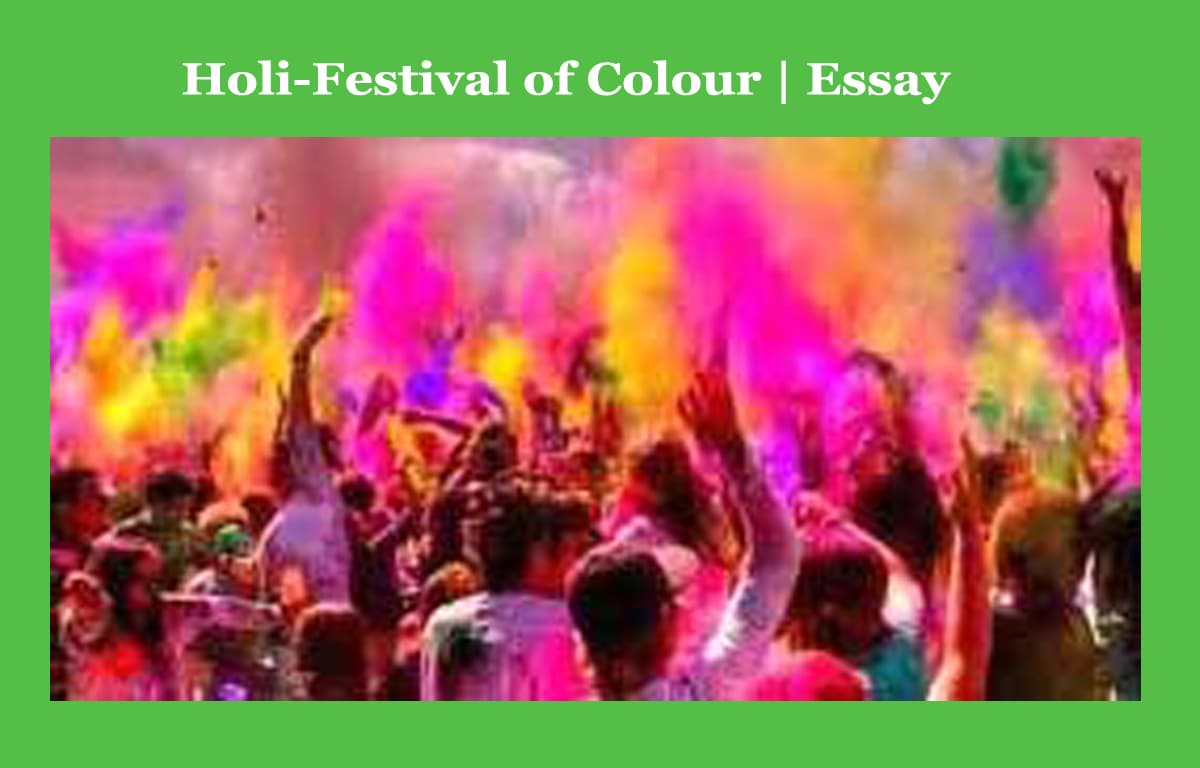
Table of Contents
Holi-Festival of Colour
Introduction
Holi, a jubilant and colorful festival, stands as one of India’s most widely celebrated events, uniting people of all ages to commemorate the triumph of good over evil and the advent of spring.
Historical Background
Rooted in ancient India, Holi weaves together both mythological and historical threads. Named after Holika, a demoness from Hindu mythology, the festival symbolizes the defeat of evil as Holika is vanquished in a bonfire. Another narrative links Holi to Lord Krishna, who mischievously played with colored powders on the gopis in Vrindavan. These tales intertwine Holi with deep-seated connections to Hindu mythology and tradition.
Date and Season
March heralds Holi, signifying the shift from winter to spring. The festival’s date varies annually based on the Hindu lunar calendar. Commencing with Holika Dahan, a symbolic bonfire on the full moon eve, the festivities peak with Rangwali Holi the following morning. The emergence of spring, coupled with vibrant blossoms adorning trees and fields, enhances the festival’s visual allure.
Rituals and Customs
Holika Dahan: A ritual centered around a bonfire on the eve of Holi, symbolizing the triumph of good over evil. People gather to sing, pray, and share in the spirit of victory.
Playful Colors: Holi’s essence lies in the playful tossing of vibrant powders and water. Individuals from diverse backgrounds join in, immersing themselves in color and spreading joy.
Sweets and Delicacies: Holi boasts delectable treats, with special sweets like gujiya and thandai prepared and shared among friends and family.
Dance and Melody: Music and dance infuse vitality into Holi celebrations. Enthusiastic performances of traditional folk dances like dandiya and raas resonate with the festive spirit.
Community Harmony: Holi fosters social unity, prompting people to set aside differences and revel in a sense of togetherness and camaraderie.
Colors and Symbolism
The vibrant hues of Holi carry profound symbolism, representing life’s diversity and the beauty of unity. The festival teaches the valuable lesson of embracing differences and celebrating the kaleidoscope of humanity. It serves as a poignant reminder that life finds deeper meaning when lived in harmony with others.
Holi Beyond India
In recent years, Holi’s popularity has transcended borders, earning recognition outside of India. Numerous countries worldwide now partake in Holi celebrations, often adopting it as a symbol of multiculturalism, peace, and love. Inspired festivals have emerged, championing values of inclusivity and diversity.
Conclusion
Holi, with its rich historical background, cultural significance, and exuberant customs, holds a special place not only in the hearts of Indians but also within the global mosaic of multicultural celebrations. It stands as a testament to the enduring human spirit’s power to unite under the banners of love and unity. 0 0 0.
List of Some Essays:
- Prize Distribution Day at My School
- How I Spend My Holidays
- My Daily Life Essay
- Science in Everyday Life Essay
- Our School Library
- Friendship Essay
- Discipline Essay
- If I Had a Million Dollars
- Essay on My Study
- Kaziranga National Park-Essay
- Mobile Phones-Good and Bad Effects
- Roles of Mobile Phones
- Durga Puja: Essa
- Traveling to a Historical Place
- Essay on Village Life in Assam
- A Train Journey Essay
- A Picnic I Shared Essay
- Essay on Outdoor Games
- My Aim In Life
- Responsibilities of Students
- Tree Plantation-Essay
- Gandhi Jayanti-Essay
- National Festivals of India-Essay
- Rainy Season-An Essay
- Teacher’s Day Celebration Essay
- Children’s Day in India Essay
- Physical Exercise Essay