Discover a comprehensive list of English translations of the Noble Quran (English Quran), from early works by Pickthall and Yusuf Ali to modern editions like The Clear Quran and Abdel Haleem, including The Holy Quran: Refined English Version by Rabbi Masrur.
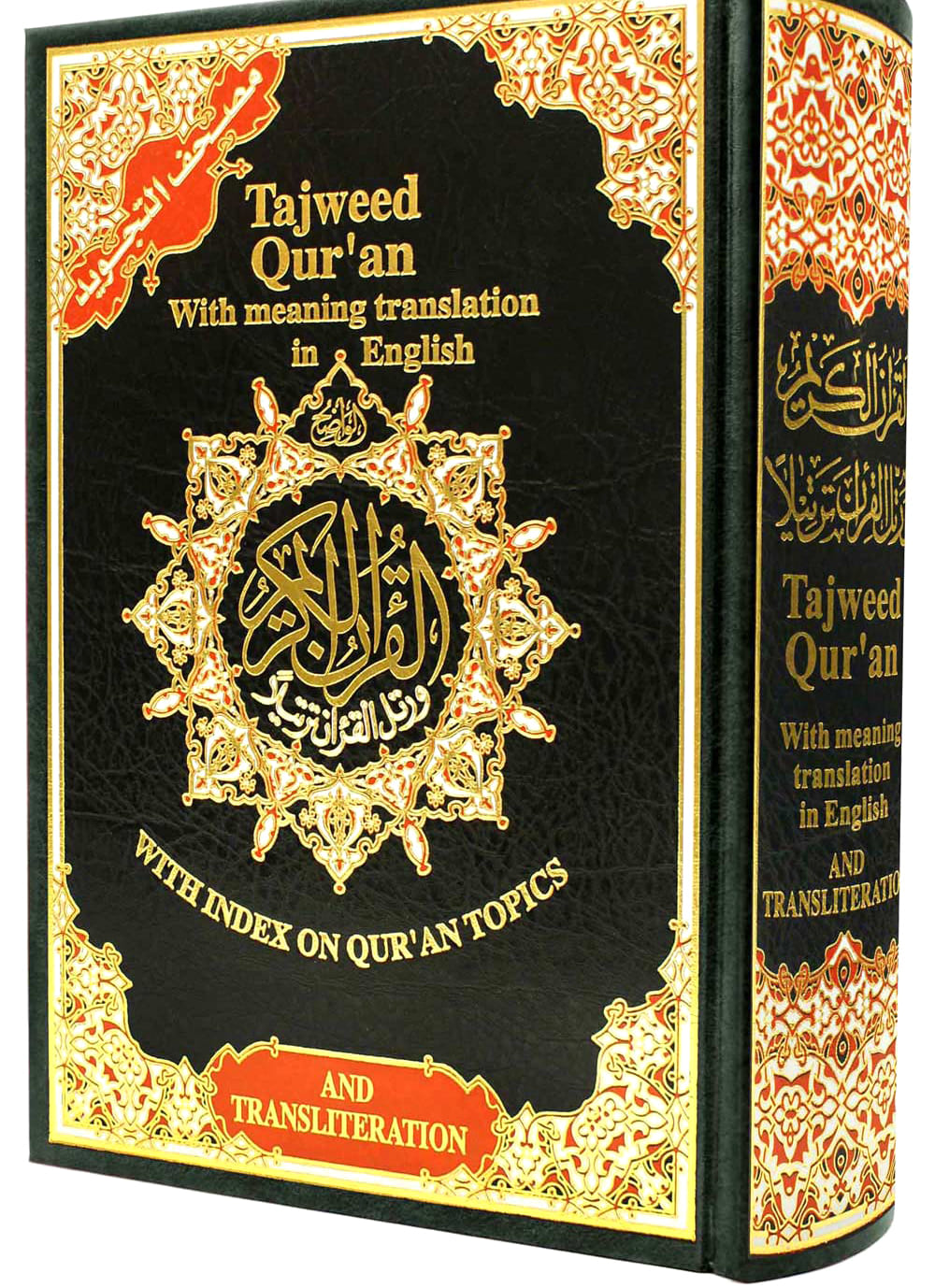
Table of Contents
English Quran: A Comprehensive List
- The Holy Quran: Refined English Version – Rabbi Masrur
- A modern refined translation aiming for clarity, simplicity, and faithfulness to the Arabic original. Designed for both scholars and general readers.
- The Koran Interpreted – Arthur J. Arberry (1955)
- A widely respected scholarly translation known for its attempt to preserve the rhythm and style of the Arabic Quran.
- The Meaning of the Glorious Qur’an – Marmaduke Pickthall (1930)
- One of the earliest widely accepted English translations by a Muslim. Formal and somewhat archaic in style.
- The Holy Qur’an: Translation and Commentary – Abdullah Yusuf Ali (1934)
- Famous for its extensive commentary and poetic style. Long used in English-speaking Muslim communities.
- The Qur’an: A New Translation – M. A. S. Abdel Haleem (2004)
- Known for modern, simple, and highly readable English while remaining faithful to the Arabic meanings.
- The Message of The Qur’an – Muhammad Asad (1980)
- A philosophical and contextual translation with deep footnotes and commentary, focusing on rational interpretation.
- The Clear Quran – Dr. Mustafa Khattab (2016)
- Praised for its contemporary English, readability, and clarity. Often used in North America.
- The Noble Qur’an: English Translation of the Meanings and Commentary – Dr. Muhammad Taqi-ud-Din al-Hilali & Dr. Muhammad Muhsin Khan (1977)
- A widely distributed Saudi-sponsored translation with commentary, particularly popular in Islamic centers worldwide.
- The Study Quran: A New Translation and Commentary – Seyyed Hossein Nasr et al. (2015)
- Combines translation with extensive scholarly commentary from multiple Islamic traditions.
- The Qur’an (Oxford World’s Classics) – Alan Jones (2007)
- A translation with academic precision, often used in university courses on Islamic studies.
- The Qur’an: A New Translation – Thomas Cleary (2004)
- Focuses on making the text accessible to spiritual seekers in clear, modern English.
- The Meaning of the Holy Qur’an – Saheeh International (1997)
- A very clear and simple translation widely used in educational and da’wah (outreach) contexts.
Comparative Table of English Translations of the Holy Quran
| Translator / Author | Title of Translation | Year | Style | Unique Feature |
|---|---|---|---|---|
| Rabbi Masrur | The Holy Quran: Refined English Version | Ongoing (Internet Edition) | Refined, clear, modern English | Balances readability with faithfulness to the Arabic; designed for both scholars and first-time readers. |
| Marmaduke Pickthall | The Meaning of the Glorious Qur’an | 1930 | Formal, archaic English | First widely accepted English translation by a Muslim. |
| Abdullah Yusuf Ali | The Holy Qur’an: Translation and Commentary | 1934 | Poetic, elevated | Includes extensive commentary and footnotes, very influential in English-speaking Muslim communities. |
| Arthur J. Arberry | The Koran Interpreted | 1955 | Literary, rhythmic | Attempts to reflect the Arabic Quran’s style and cadence in English. |
| Hilali & Muhsin Khan | The Noble Qur’an: English Translation of the Meanings and Commentary | 1977 | Literal, explanatory | Popular in Saudi Arabia; includes commentary influenced by Hadith and classical tafsir. |
| Muhammad Asad | The Message of The Qur’an | 1980 | Rational, contextual | Strong philosophical commentary, appealing to modern intellectual readers. |
| Saheeh International | The Meaning of the Holy Qur’an | 1997 | Clear, simple English | Very accessible and widely used for dawah and education. |
| M. A. S. Abdel Haleem | The Qur’an: A New Translation | 2004 | Modern, smooth | Academic yet readable; focuses on clarity of meaning for modern readers. |
| Thomas Cleary | The Qur’an: A New Translation | 2004 | Simple, spiritual | Aimed at spiritual seekers with straightforward English. |
| Alan Jones | The Qur’an (Oxford World’s Classics) | 2007 | Academic, precise | Commonly used in universities and scholarly settings. |
| Seyyed Hossein Nasr et al. | The Study Quran | 2015 | Scholarly, comprehensive | Combines translation with extensive multi-tradition commentary. |
| Dr. Mustafa Khattab | The Clear Quran | 2016 | Contemporary, fluent English | Designed for modern readability and ease of understanding; widely adopted in North America. |
English Translations of the Noble Quran: A Comparative Study
Explore the history of English translations of the Noble Quran, from Pickthall and Yusuf Ali to Abdel Haleem and The Clear Quran. Discover how The Holy Quran: Refined English Version by Rabbi Masrur continues this legacy with clarity and refinement.
Introduction
The Holy Quran is the eternal word of Allah (God), revealed to the Prophet Muhammad (peace be upon him) over 1400 years ago. While the Arabic Quran remains unchanged and inimitable, translations have played an essential role in making its message accessible to non-Arabic speakers. Today, English translations of the Quran are among the most widely read, as English has become a global language of communication, education, and scholarship.
Over the last century, several important English translations have been produced—each shaped by its translator’s background, audience, and linguistic approach. Some aimed at poetic elegance, others at literal accuracy, and others at simplicity for the general reader.
Among these works stands The Holy Quran: Refined English Version by Rabbi Masrur, which continues the legacy of earlier translations while offering something new: a refined, modern, and accessible rendering of the Quran’s meaning in English.
This article provides a comparative study of notable English translations, highlighting their features and situating Rabbi Masrur’s refined edition within this tradition.
Early Efforts at Translation
Before the 20th century, many English translations of the Quran were produced by non-Muslims, often with biases or inaccuracies. They were more polemical than faithful. It was only in the early 20th century that Muslims themselves began producing widely accepted translations.
Key English Translations of the Holy Quran
1. Marmaduke Pickthall – The Meaning of the Glorious Qur’an (1930)
- Style: Formal, somewhat archaic English.
- Strength: First major translation by a Muslim that gained wide acceptance.
- Limitation: Language feels dated for modern readers.
Pickthall’s work was groundbreaking for its time, as it sought to stay faithful to the Arabic without heavy commentary. However, its use of older English forms like thou and thy makes it less accessible today.
2. Abdullah Yusuf Ali – The Holy Qur’an: Translation and Commentary (1934)
- Style: Poetic and elevated.
- Strength: Includes extensive commentary and footnotes.
- Limitation: Commentary sometimes reflects personal interpretation.
Yusuf Ali’s translation became the most popular in the English-speaking Muslim world for decades. Its beauty lies in its poetic rhythm, though at times this sacrifices clarity.
3. Arthur J. Arberry – The Koran Interpreted (1955)
- Style: Literary, rhythmic.
- Strength: Attempts to capture the cadence and music of the Arabic.
- Limitation: Lacks explanatory notes, sometimes hard to follow.
Arberry was not a Muslim, but his work is respected for its literary sensitivity. It is often used in academic contexts.
4. Hilali & Muhsin Khan – The Noble Qur’an: English Translation of the Meanings and Commentary (1977)
- Style: Literal with heavy commentary.
- Strength: Popular in Saudi Arabia; widely distributed.
- Limitation: Commentary often makes the text long and less fluent.
This edition is widely found in mosques and Islamic centers, but critics note that its heavy inclusion of hadith-based commentary makes it more interpretative than purely translational.
5. Muhammad Asad – The Message of The Qur’an (1980)
- Style: Rational, philosophical.
- Strength: Extensive footnotes; appeals to intellectual readers.
- Limitation: Some interpretations reflect modernist tendencies.
Asad’s version is one of the most intellectual translations, offering depth and reflection, though it may be difficult for beginners.
6. Saheeh International – The Meaning of the Holy Qur’an (1997)
- Style: Simple, clear English.
- Strength: Highly accessible; widely used for teaching and dawah.
- Limitation: Simplicity may miss some depth.
Produced by a team of women translators, Saheeh International’s version became one of the most widely distributed in modern times.
7. M. A. S. Abdel Haleem – The Qur’an: A New Translation (2004)
- Style: Smooth, modern English.
- Strength: Combines accuracy with readability.
- Limitation: Sometimes paraphrases for clarity.
Abdel Haleem’s translation is widely praised in academic and public settings for its balance of clarity and fidelity.
8. Thomas Cleary – The Qur’an: A New Translation (2004)
- Style: Simple and spiritual.
- Strength: Designed for seekers and general readers.
- Limitation: Lacks scholarly apparatus.
Cleary’s work makes the Quran approachable for those outside the Muslim faith.
9. Alan Jones – The Qur’an (Oxford World’s Classics) (2007)
- Style: Academic, precise.
- Strength: Scholarly and reliable.
- Limitation: Dense, not reader-friendly for general audiences.
This translation is mainly used in university contexts where precision is prioritized.
10. Seyyed Hossein Nasr et al. – The Study Quran (2015)
- Style: Scholarly with commentary.
- Strength: Brings together multiple Islamic traditions in commentary.
- Limitation: Large, complex, more of a study resource than a personal reading copy.
This translation is valuable for scholars who want comprehensive commentary alongside the text.
11. Dr. Mustafa Khattab – The Clear Quran (2016)
- Style: Contemporary, fluent English.
- Strength: Highly readable, especially for young audiences and newcomers.
- Limitation: Some critics say simplicity may reduce depth.
The Clear Quran has become popular in North America for its accessibility.
12. Rabbi Masrur – The Holy Quran: Refined English Version (Ongoing Internet Edition)
- Style: Refined, clear, elegant modern English.
- Strength: Eliminates ambiguity, preserves beauty, appeals to all readers.
- Limitation: Like all translations, cannot fully capture the Arabic original.
Rabbi Masrur’s Refined English Version builds upon the tradition of earlier translators but sets itself apart with its emphasis on refinement. It is not overly archaic like Pickthall, not overly poetic like Yusuf Ali, and not overly simplified like Saheeh International. Instead, it strikes a balance—faithful, modern, and polished.
It invites readers to reflect on the divine message directly, without excessive commentary, yet in a way that speaks clearly to the modern mind.
Comparative Summary Table
| Translator / Author | Year | Style | Unique Feature |
|---|---|---|---|
| Marmaduke Pickthall | 1930 | Formal, archaic | First Muslim translator widely accepted. |
| Abdullah Yusuf Ali | 1934 | Poetic, elevated | Famous commentary and footnotes. |
| Arthur J. Arberry | 1955 | Literary, rhythmic | Captures Arabic cadence. |
| Hilali & Muhsin Khan | 1977 | Literal + commentary | Popular Saudi-sponsored version. |
| Muhammad Asad | 1980 | Rational, philosophical | Intellectual with deep notes. |
| Saheeh International | 1997 | Clear, simple | Widely used in education. |
| M. A. S. Abdel Haleem | 2004 | Smooth, modern | Balanced academic clarity. |
| Thomas Cleary | 2004 | Simple, spiritual | Designed for seekers. |
| Alan Jones | 2007 | Academic, precise | Scholarly translation. |
| Seyyed Hossein Nasr et al. | 2015 | Scholarly + commentary | Multi-tradition study resource. |
| Mustafa Khattab | 2016 | Contemporary, fluent | Highly readable modern version. |
| Rabbi Masrur | 2025 | Refined, clear, elegant | Bridges clarity and beauty for all readers. |
Conclusion
The history of English translations of the Quran reveals a diversity of approaches—poetic, literal, scholarly, and simplified. Each translation served the needs of its time and audience.
Within this tradition, The Holy Quran: Refined English Version by Rabbi Masrur stands as a new milestone. It offers a translation that is both faithful and refined, eliminating ambiguity while preserving the majesty of the Quran’s message.
For seekers, scholars, and newcomers alike, this refined edition invites readers into a direct engagement with the divine word, reminding us that while translations can never replace the Arabic original, they can open hearts and minds to its wisdom. 0 0 0