Why Do Leaves Change Color? Discover why leaves change color every autumn. Learn the fascinating science behind this natural transformation, from chlorophyll breakdown to the magic of carotenoids and anthocyanins.
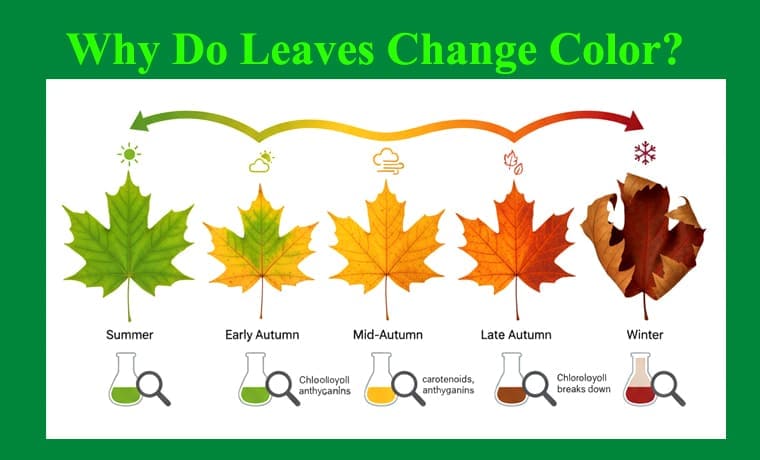
Table of Contents
Why Do Leaves Change Color? The Science Behind Nature’s Beautiful Transformation
Introduction
Every autumn, forests and parks transform into breathtaking canvases of red, orange, and yellow. But have you ever wondered why leaves change color before falling? The answer lies in the science of plant pigments and seasonal changes. This colorful phenomenon is not just beautiful—it’s a sign of how plants adapt to survive through winter.
The Role of Chlorophyll: The Green Pigment of Life
During spring and summer, leaves look green because they contain chlorophyll, a pigment vital for photosynthesis—the process by which plants convert sunlight into food.
- Chlorophyll absorbs sunlight and transforms carbon dioxide and water into sugars, giving energy to the plant.
- However, chlorophyll requires sunlight and warmth. When days grow shorter and temperatures drop, trees begin to prepare for winter by stopping chlorophyll production.
As chlorophyll fades away, the green color disappears—allowing other pigments hidden within the leaves to shine through.
The Hidden Colors: Carotenoids and Anthocyanins
Once chlorophyll breaks down, two other types of pigments become visible:
- Carotenoids – These pigments produce yellow and orange shades found in trees like birches, maples, and hickories.
- Carotenoids are always present in leaves but are masked by chlorophyll’s dominant green color.
- When the green pigment fades, these warm hues emerge.
- Anthocyanins – These pigments are responsible for reds, purples, and crimson tones.
- Unlike carotenoids, anthocyanins are produced in autumn as a response to light and excess sugars trapped in leaves.
- They help protect leaves from sun damage and aid in nutrient recovery before the leaves fall.
Environmental Factors That Affect Leaf Color
The vibrancy of autumn leaves depends on several environmental conditions:
- Temperature: Warm days and cool nights enhance red pigment production.
- Sunlight: Bright sunlight increases sugar concentration, intensifying red and purple hues.
- Moisture: Too much rain or early frost can dull colors or cause leaves to drop prematurely.
A perfect combination of sunny days and cool nights produces the most striking autumn colors.
Why Leaves Fall After Changing Color
After the pigments have done their job, trees shed their leaves to conserve energy and water.
- A special layer called the abscission layer forms at the base of each leaf stem.
- This layer gradually cuts off water and nutrient flow, causing the leaf to detach.
By losing leaves, trees protect themselves from dehydration and damage during harsh winters.
Conclusion
The changing colors of leaves are nature’s way of celebrating the end of a growing season. It’s a perfect balance of science and beauty—where light, temperature, and chemistry come together to create a breathtaking display. So next time you admire the autumn landscape, remember that you’re witnessing one of nature’s most fascinating survival strategies.
You May Like: How to Lose Belly Fat?
Question-Answers on “Why Do Leaves Change Color?”
Q1. Why do leaves change color in the fall?
Leaves change color because trees stop producing chlorophyll in response to shorter days and cooler temperatures. As chlorophyll fades, other pigments like carotenoids and anthocyanins become visible.
Q2. Why do some trees turn red while others turn yellow?
Trees that produce carotenoids show yellow or orange leaves, while trees that produce anthocyanins turn red or purple. Different species have different pigment compositions.
Q3. Do all trees change color before winter?
No. Evergreen trees, like pines and firs, keep their green needles year-round because they have waxy coatings and special adaptations to survive winter.
Q4. Can weather affect the color of leaves?
Yes. Warm, sunny days and cool nights enhance bright red colors, while cloudy or rainy weather tends to make colors duller.
Q5. What happens to the pigments after the leaves fall?
Once on the ground, leaves decompose, and their pigments break down, enriching the soil with nutrients for the next growing season.
Q1. Why do leaves change color in the fall?
Because trees stop producing chlorophyll when days grow shorter. As it fades, pigments like carotenoids and anthocyanins show their true colors.
Q2. Why do some trees turn red while others turn yellow?
It depends on the dominant pigments. Carotenoids create yellow/orange hues, while anthocyanins produce red and purple tones.
Q3. Do evergreen trees change color too?
No. Evergreen trees like pine and spruce retain their green needles year-round, thanks to a protective waxy coating and chemical adaptations.
Q4. How do temperature and sunlight affect leaf color?
Warm, sunny days and cool nights enhance red pigments. Cloudy weather or excessive rain can reduce brightness and shorten the color season.
Q5. Why do leaves fall after changing color?
Leaves fall because the abscission layer cuts off nutrient flow, allowing trees to conserve energy during winter.
Q6. Can pollution affect autumn leaf colors?
Yes. High pollution levels and acid rain can damage leaves and dull their natural pigments, making the colors less vibrant. 0 0 0
Why Do Leaves Change Color? The Science Behind Nature’s Beautiful Transformation
Ever wondered why leaves change color every fall? Discover the science behind this stunning transformation — from chlorophyll breakdown to the hidden magic of carotenoids and anthocyanins.
Featured Snippet (For Google Search)
Leaves change color in autumn because trees stop producing chlorophyll, the green pigment used in photosynthesis. As chlorophyll breaks down, other pigments like carotenoids (yellow/orange) and anthocyanins (red/purple) become visible, creating the beautiful fall foliage we see before trees shed their leaves for winter.
Introduction: Nature’s Colorful Transition
Every autumn, the landscape bursts into warm hues of red, orange, and yellow. But why do leaves change color? This natural event is not just about beauty—it’s a result of chemical changes inside the leaf as trees prepare for winter. Understanding the science of leaf color change helps us appreciate nature’s seasonal rhythm even more.
The Role of Chlorophyll in Leaf Color
During spring and summer, leaves appear green due to chlorophyll, a pigment that helps plants capture sunlight for photosynthesis.
- Chlorophyll converts sunlight, carbon dioxide, and water into glucose, the plant’s food.
- However, when days become shorter and temperatures drop, trees stop producing chlorophyll.
- As chlorophyll fades, the hidden pigments underneath start to show their true colors.
Related post: What Is Photosynthesis and How Does It Work?
The Hidden Pigments: Carotenoids and Anthocyanins
When the dominant green fades, two other pigments reveal the real magic behind autumn:
- Carotenoids – These pigments produce yellow and orange hues.
- Found in trees like birch, maple, and hickory.
- They are always present in leaves but are masked by chlorophyll’s green.
- Anthocyanins – These pigments are responsible for red and purple tones.
- Produced only in autumn when sunlight and cool nights trap extra sugars in leaves.
- They act as a natural sunscreen and help plants recover nutrients before shedding.
Explore more: The Science of Plant Pigments Explained
Environmental Factors That Influence Leaf Colors
The brilliance of fall foliage depends on several environmental conditions:
- Temperature: Cool nights and warm days intensify red pigment formation.
- Sunlight: Bright sunlight increases sugar levels, enhancing red and purple tones.
- Rainfall: Adequate moisture leads to brighter colors; drought or early frost dulls them.
A perfect balance of sunlight, moisture, and cool air creates the most vibrant autumn scenes.
Why Leaves Eventually Fall
After showing off their autumn beauty, leaves fall to help trees conserve water and energy during winter.
- A layer called the abscission layer forms at the base of the leaf stem.
- This layer gradually blocks water and nutrients, causing the leaf to detach naturally.
- Fallen leaves decompose and return nutrients to the soil, completing the cycle of nature.
You may also like: Why Do Trees Shed Their Leaves in Winter?
To Sum Up
The changing color of leaves is a delicate dance between science and beauty. As chlorophyll fades, the hidden pigments of carotenoids and anthocyanins paint the world in warm tones before the trees rest for winter. So next time you see leaves turn red or gold, remember—you’re witnessing one of nature’s most poetic survival strategies. 0 0 0