Zubeen Garg: A Comprehensive Biography. Discover the legendary journey of Zubeen Garg, the iconic voice of Assam and India. Explore his powerful life story as a singer, actor, composer, and humanitarian whose music touched millions.
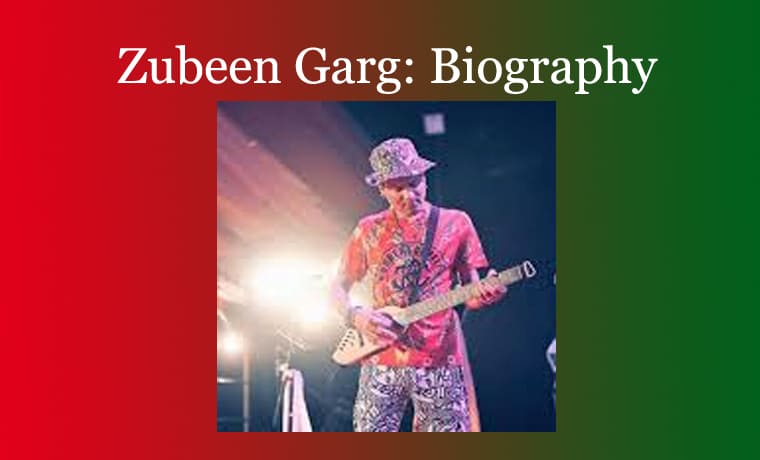
Zubeen Garg: A Comprehensive Biography
Zubeen Garg, whose full name was Zubeen Borthakur, was one of the most loved and respected musicians from Assam and India. He was born on November 18, 1972, in Tura, Meghalaya, into an Assamese Brahmin family. His father, Mohini Mohon Borthakur, worked as a magistrate in the Assam Civil Service and was also a well-known poet and lyricist who wrote under the pen name ‘Kapil Thakur’. His mother, Ily Borthakur, was a singer who gave Zubeen his first music lessons. From both parents, he inherited the gift of art, and music became a natural part of his life from childhood.
Zubeen had two sisters. His elder sister Jonkie Borthakur was also a singer and actress, but sadly she died in a car accident in 2002. In her memory, Zubeen released a special album called ‘Xixhu’. His younger sister, Palme, became a professor of geography. Zubeen chose the name ‘Garg’ instead of continuing with his family surname Borthakur. This was taken from his Brahmin gotra, and it gave him a distinct identity, combining local heritage with modern influence.
He grew up in many different places of Assam because of his father’s transferable job, and later the family settled in Jorhat. Zubeen studied at Tamulpur Higher Secondary School, then completed higher secondary education in science at J.B. College and Karimganj College between 1990 and 1992. He later joined B. Borooah College in Guwahati for a degree in science, but he dropped out to fully devote himself to music, which was his real passion.
Zubeen began singing as a child. At the age of three, he was already able to sing simple tunes. His mother was his first teacher, but later he trained in tabla for 11 years under Pandit Robin Banerjee. Another guru, Ramani Rai, introduced him to Assamese folk music. By his teenage years, Zubeen had already started writing and composing his own songs, preparing for the musical journey that would make him a household name.
His professional career began in 1992 when he won a gold medal in a youth festival for western solo singing. That same year, he released his first Assamese music album, ‘Anamika’. Soon, more albums followed, such as ‘Xopunor Xur’, ‘Junaki Mon’, ‘Maya’, and ‘Asha’. His early success in Assam encouraged him to move to Mumbai in 1995 to try his luck in Bollywood. Before that, he had released his first Bihu album, ‘Ujan Piriti’, which became very popular.
In Mumbai, Zubeen recorded Hindi albums and also got opportunities in Bollywood films. He sang for movies like ‘Dil Se’, ‘Doli Saja Ke Rakhna’, ‘Fiza’, and ‘Kaante’. In 2006, he achieved nationwide fame when he sang the song ‘Ya Ali’ for the film Gangster. This song became a massive hit across India and abroad, and it earned him the Global Indian Film Award for Best Playback Singer. After this, Zubeen became well known in the Hindi film industry as well. He also made a strong career in the Bengali music industry, singing in many films such as Mon, Shudhu Tumi, and Premi.
Apart from being a singer, Zubeen was a multi-instrumentalist. He could play around 12 different instruments including guitar, tabla, harmonium, drums, dhol, dotara, and mandolin. His wide skills helped him experiment with various styles of music, from folk to classical, from Bollywood to fusion. Over a career of more than three decades, he recorded more than 38,000 songs in over 40 languages and dialects, including Assamese, Hindi, Bengali, Nepali, Tamil, Telugu, Marathi, Bhojpuri, Kannada, and even English. This versatility made him one of the most prolific singers in India.
Zubeen was also an actor, director, and filmmaker. He acted in Assamese movies such as Prem Aru Prem, Mon Jaai, Gaane Ki Aane, Mission China, Kanchanjangha, Rajneeti, and many others. Some of these films were also directed and produced by him. Through films like Kanchanjangha, he highlighted social issues such as corruption in government recruitment processes.
He was a popular live performer who sang in countless concerts, both in Assam and abroad. He regularly performed during Bihu festivals, college functions, and international events. Notably, he was the first Assamese artist to perform in Trinidad and Tobago, where he sang in front of a large audience, representing Assam’s culture on the global stage.
Zubeen’s life was not free from controversies. His outspoken nature often brought criticism. For example, in 2019, he made a statement about Brahmins that hurt sentiments, and he later apologised. In 2024, during a Bihu function, he said that Lord Krishna was not God but a man, which created another controversy and led to his ban from the Majuli District Satra Mahasabha.
However, he was also admired for his humanitarian work. Through his foundation, Kalaguru Artiste Foundation, he supported many social causes. He raised money and donated for flood-affected people in Assam, arranged medicines and clothes for the needy, and even offered his house in Guwahati to be used as a COVID care centre during the 2021 pandemic crisis. He also took part in charity football matches to collect funds. Importantly, he played a visible role in the anti-CAA movement in Assam, becoming a voice of protest for ordinary people.
In his personal life, Zubeen married Garima Saikia, a fashion designer from Golaghat, on 4 February 2002. They shared a long partnership, and Garima often supported him in his music and public life. Zubeen described himself as irreligious and said he did not follow caste or religion strictly.
Tragically, Zubeen Garg died on 19 September 2025 in Singapore at the age of 52. He drowned while swimming in the sea without a life jacket. Though he was rushed to the hospital, he could not be saved. His death shocked the entire region. The Assam government decided to cremate him with full state honours. His body was kept for public tribute at the Arjun Bhogeswar Baruah Sports Complex in Guwahati, where thousands of fans came to say goodbye. On 23 September, he was given a state funeral with a 21-gun salute. His ashes were immersed in Jorhat, and memorials were planned in both Guwahati and Jorhat.
Leaders across India expressed their grief. Prime Minister Narendra Modi, Rahul Gandhi, Assam Chief Minister Himanta Biswa Sarma, West Bengal Chief Minister Mamata Banerjee, and many others paid tribute. Artists from the Indian music and film world, including A. R. Rahman, Pritam, Hariharan, Papon, Shreya Ghoshal, Sunidhi Chauhan, Badshah, and many others, mourned his passing. Assamese actor Adil Hussain called it a heartbreaking loss. Fans across Assam lit lamps and played his songs in his memory.
One of his last wishes was that his song ‘Mayabini Raatir Bukut’ should be played after his death. His fans honoured this wish by singing the song at his funeral and in many gatherings, turning it into a collective anthem of tribute.
Zubeen Garg left behind not just songs but a cultural legacy. He was more than a musician—he was a symbol of Assam’s modern identity, a bridge between folk and global music, and a voice that united millions of people. Statues and memorials have been made in his honour, such as the 20-foot statue in Digboi and a bamboo bridge named after him in Tengapani. His songs continue to inspire, heal, and entertain, keeping his spirit alive for future generations. 0 0 0
Jubeen Garg: Data in Brief
| Category | Details |
|---|---|
| Name | Zubeen Garg (born Zubeen Borthakur) |
| Birth | 18 November 1972, Tura, Meghalaya |
| Parents | Father – Mohini Mohon Borthakur; Mother – Ily Borthakur |
| Wife | Garima Saikia (married in 2002) |
| First Album | Anamika (1992) |
| Famous Song | Ya Ali (2006, film Gangster) |
| Languages | Sung in more than 40 languages |
| Instruments | Played 12 instruments (guitar, tabla, harmonium, etc.) |
| Total Songs | Over 38,000 recorded |
| Acting | Acted in Assamese films like Mon Jaai, Mission China, Kanchanjangha |
| Social Work | Helped flood victims, COVID patients, active in anti-CAA protest |
| Death | 19 September 2025, Singapore (drowned while swimming) |
| Funeral | 23 September 2025, Guwahati (full state honours) |
| Legacy | Icon of Assamese music and culture; statue in Digboi, bridge in Tengapani |
Frequently Asked Questions on Zubeen Garg
Q1. Who was Zubeen Garg?
Ans: Zubeen Garg was a famous Indian singer, composer, actor, and filmmaker from Assam.
Q2. When and where was Zubeen Garg born?
Ans: He was born on 18 November 1972 in Tura, Meghalaya.
Q3. What was his real name?
Ans: His real name was Zubeen Borthakur.
Q4. Why did he change his surname to Garg?
Ans: He chose ‘Garg’ from his Brahmin gotra to make his identity unique.
Q5. What was his first Assamese album?
Ans: His first album was Anamika, released in 1992.
Q6. Which Bollywood song made Zubeen Garg famous?
Ans: The song Ya Ali from the film Gangster (2006) made him very popular.
Q7. How many languages did he sing in?
Ans: He sang in more than 40 languages, including Assamese, Hindi, Bengali, and Nepali.
Q8. How many songs did Zubeen Garg record in his career?
Ans: He recorded over 38,000 songs in 33 years of his career.
Q9. Which musical instruments could he play?
Ans: He could play around 12 instruments, like guitar, tabla, harmonium, drums, and mandolin.
Q10. Did Zubeen Garg act in films?
Ans: Yes, he acted in Assamese films like Mon Jaai, Mission China, and Kanchanjangha.
Q11. Who was Zubeen Garg’s wife?
Ans: He was married to Garima Saikia, a fashion designer from Golaghat.
Q12. What kind of social work did he do?
Ans: He helped flood victims, supported COVID patients, and was active in the anti-CAA protest.
Q13. When and how did Zubeen Garg die?
Ans: He died on 19 September 2025 in Singapore after drowning while swimming.
Q14. How was he honoured after death?
Ans: He was cremated with full state honours in Guwahati with a 21-gun salute.
Q15. What is Zubeen Garg’s legacy?
Ans: He is remembered as the cultural icon of Assam, with a statue in Digboi and a bridge named after him in Tengapani.